
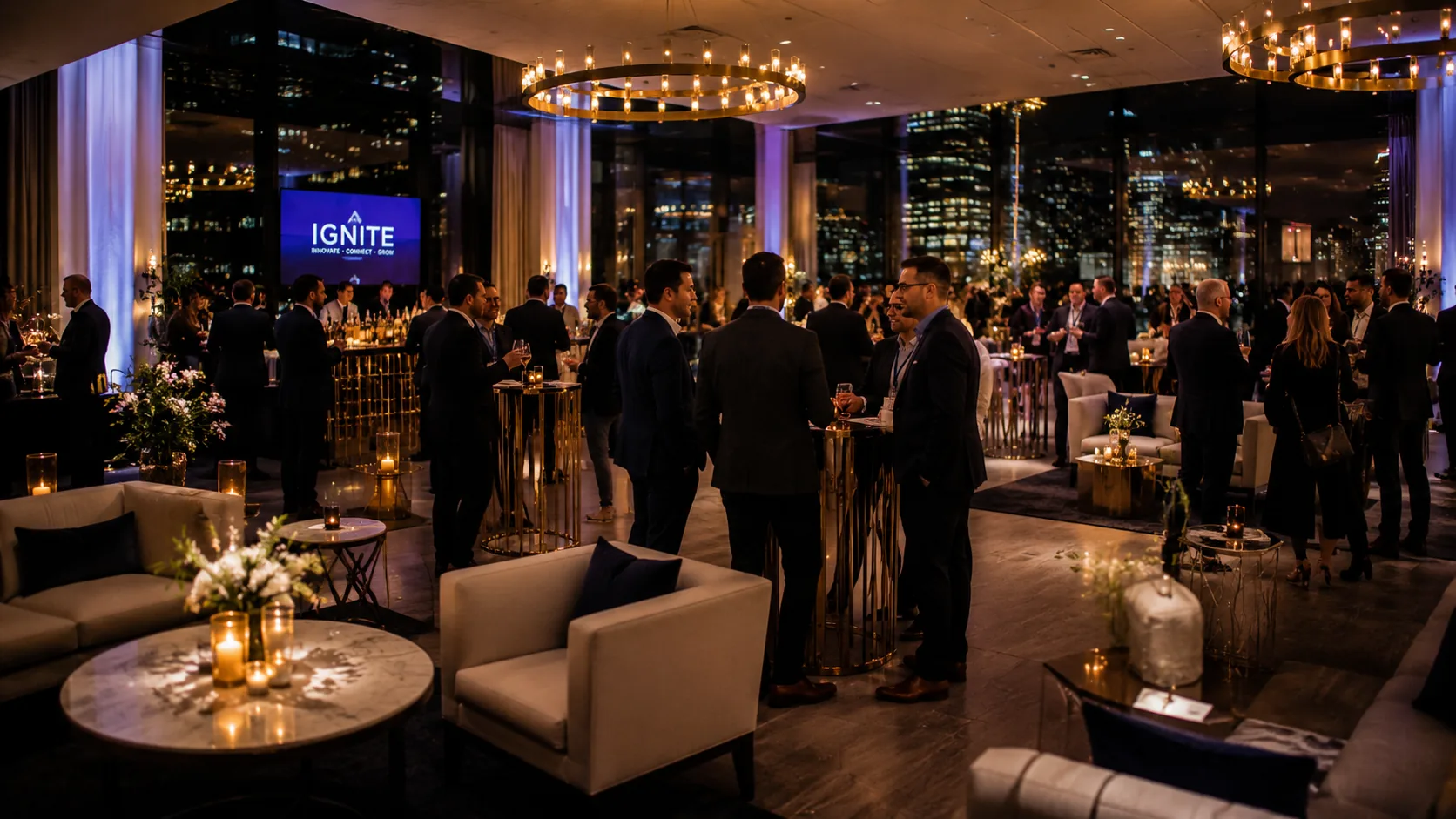
Corporate event entertainment in Chicago is not a playlist problem. It is a room problem. You have a guest list that mixes a C-suite, a sales team coming off a hard quarter, and a handful of clients you are quietly hoping to impress — all in the same ballroom at 6:40 p.m., drink in hand, waiting to see what happens next. The entertainment you book decides whether that room loosens up or stays in clusters by department until the shuttle arrives.
After forty years and more than 750 events behind the booth, Scott “Smokin’” Silz has learned that the companies who get this right do not spend more money. They brief better. Here is how to plan corporate event entertainment in Chicago so the night actually does something for your team.
What Corporate Event Entertainment in Chicago Actually Has to Do
Most companies book a DJ the way they book a caterer: three quotes, pick the middle one, hope for the best. The event happens, everyone says it was nice, and nobody remembers a thing by Tuesday. Nice is the problem.
Entertainment at a corporate event carries four jobs at once, and only one of them is music.
- It gives arrivals somewhere to go, so the first thirty minutes do not turn into a wall of people studying name tags.
- It keeps the program on time, because a room that trusts the sound cues will sit down when you ask.
- It reads the crowd in real time — the table of engineers, the table of sales reps, the client table that needs to be impressed without being embarrassed.
- It ends the night on a high note instead of a slow fade, so people leave with the story rather than the exit.
The Three Moments That Decide Whether the Night Lands
1. The first twenty minutes
Guests arrive in waves, and they arrive self-conscious. The right soundtrack here is not the party playlist — it is warm, mid-tempo, and just familiar enough that two people who have never met can say something about it. Get this wrong and the room never quite recovers. Get it right and by seven o’clock the bar line is a conversation.
2. The program block
Awards, remarks, a founder’s toast, a video. This is where an experienced DJ earns the fee. Microphones that do not squeal, walk-in music that ends exactly when the CEO reaches the podium, a music bed under the awards that keeps momentum without competing with the speaker. Ten seconds of dead air in the middle of a recognition segment undoes an hour of planning.
3. The last hour
The last hour is the one people remember, and it is the one most vendors plan least. By 9:30 p.m. the room has thinned, the executives have gone home, and the people still standing are the ones who actually build your business. That hour should feel like a reward, not a wind-down.
How to Choose a Corporate Entertainment Partner in Chicago
Chicago has no shortage of people with a laptop and a speaker. What separates a partner from a vendor is what happens before the event.
- A real planning call, not a quote form. Someone should ask about your guest count, the age spread, the venue’s sound restrictions, and what happened last year.
- A written run of show. Cue times, names, pronunciation notes, and who gives the signal for each transition.
- Backup gear and a backup plan. Load-in windows in Chicago venues are tight, freight elevators are slower than anyone expects, and a hotel ballroom’s house sound is not always what the sales packet promised.
- Insurance and venue familiarity. Most downtown hotels, museums, and riverfront lofts require a certificate of insurance and a preferred-vendor conversation. Ask early.
What Corporate Event Entertainment in Chicago Costs
Pricing moves with four variables: the length of the event, the size of the room, the amount of production — lighting, wireless microphones, a second setup for a breakout space — and the date. A Thursday in February is a different number than the second Saturday in December. What should not move is what is included: setup, breakdown, planning meetings, and a DJ on site early enough to walk the room before your first guest arrives.
If you are comparing quotes, compare the run of show, not just the line item. Two quotes that differ by a few hundred dollars are rarely the same product.
Questions Worth Asking Before You Sign
- Who will actually be behind the booth, and have they worked this venue before?
- How do you handle a room where half the guests are 25 and half are 60?
- What is your microphone and backup plan if the house system fails?
- How much input do we get on the music, and how do you handle a do-not-play list?
- What time do you arrive, and who coordinates with the venue’s AV contact?
“The DJ did an amazing job. Very professional. Arrived early to set up and everything was good to go by the time my guests arrived.” — Madeline T., Hot Mix Entertainment client
Why Chicago Companies Keep Calling Hot Mix
Scott Silz is an original member of the Hot Mix 5, the group that shaped Chicago radio and, by extension, the way this city dances. That history is not nostalgia — it is working knowledge of what moves a Chicago room, from a River North rooftop to a Rosemont ballroom to a museum atrium on the Park. Forty years in, he still runs his own booth, still takes the planning call himself, and still treats a corporate party with the same care as a wedding reception. You can read what clients say on our reviews page, or see how the corporate side of the work is put together on our corporate events page.
If you are planning a company party, a client reception, an awards dinner, or a holiday celebration anywhere in the Chicago area, the next step is simple: check your date. You will get a straight answer on availability, a planning conversation with Scott, and a run of show built around the room you actually have.